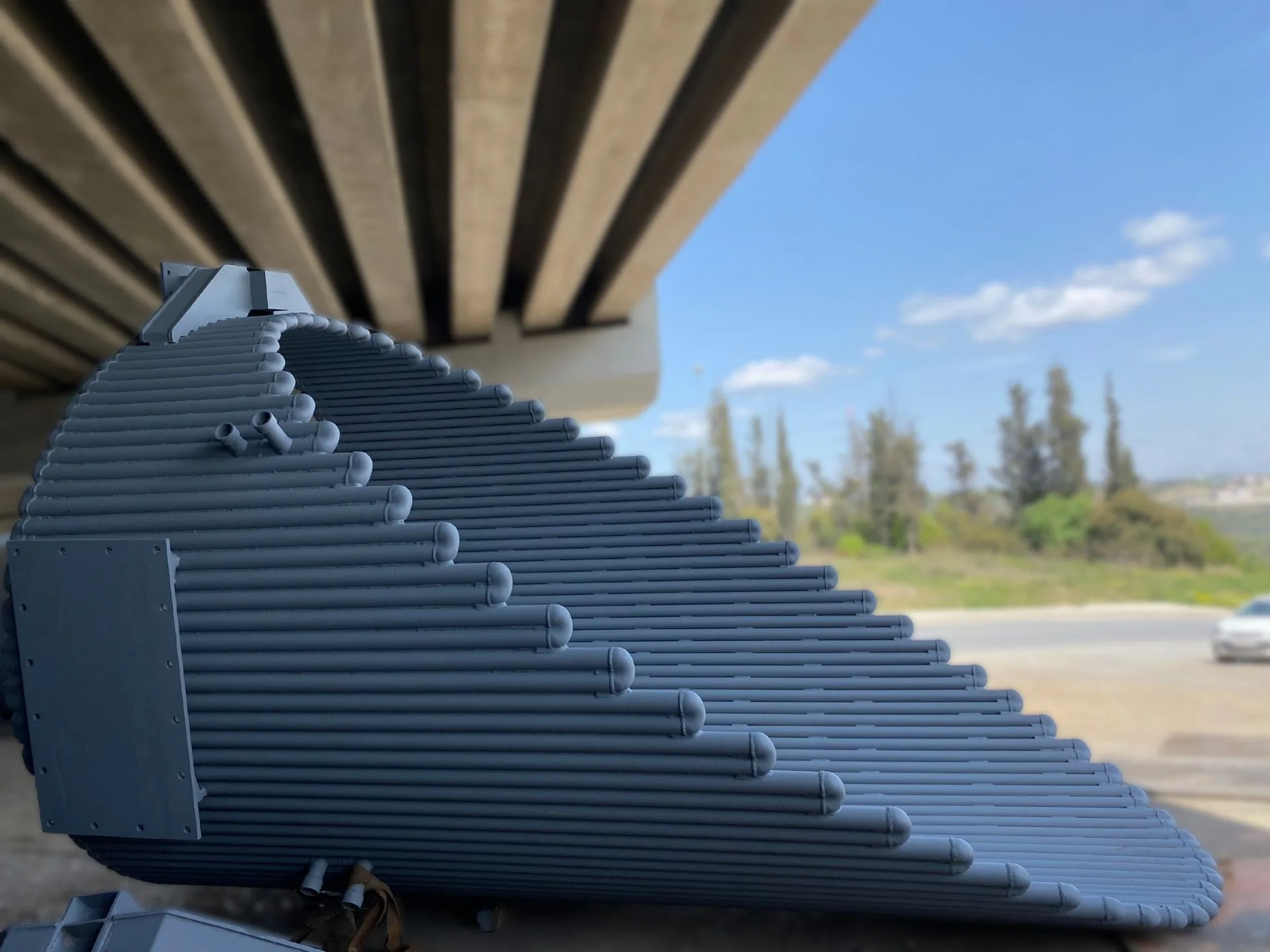
Products
Electric arc furnace flue gas passes through a chain of equipment from the furnace to the bag filter. DNL Mühendislik manufactures the equipment that makes up this chain.
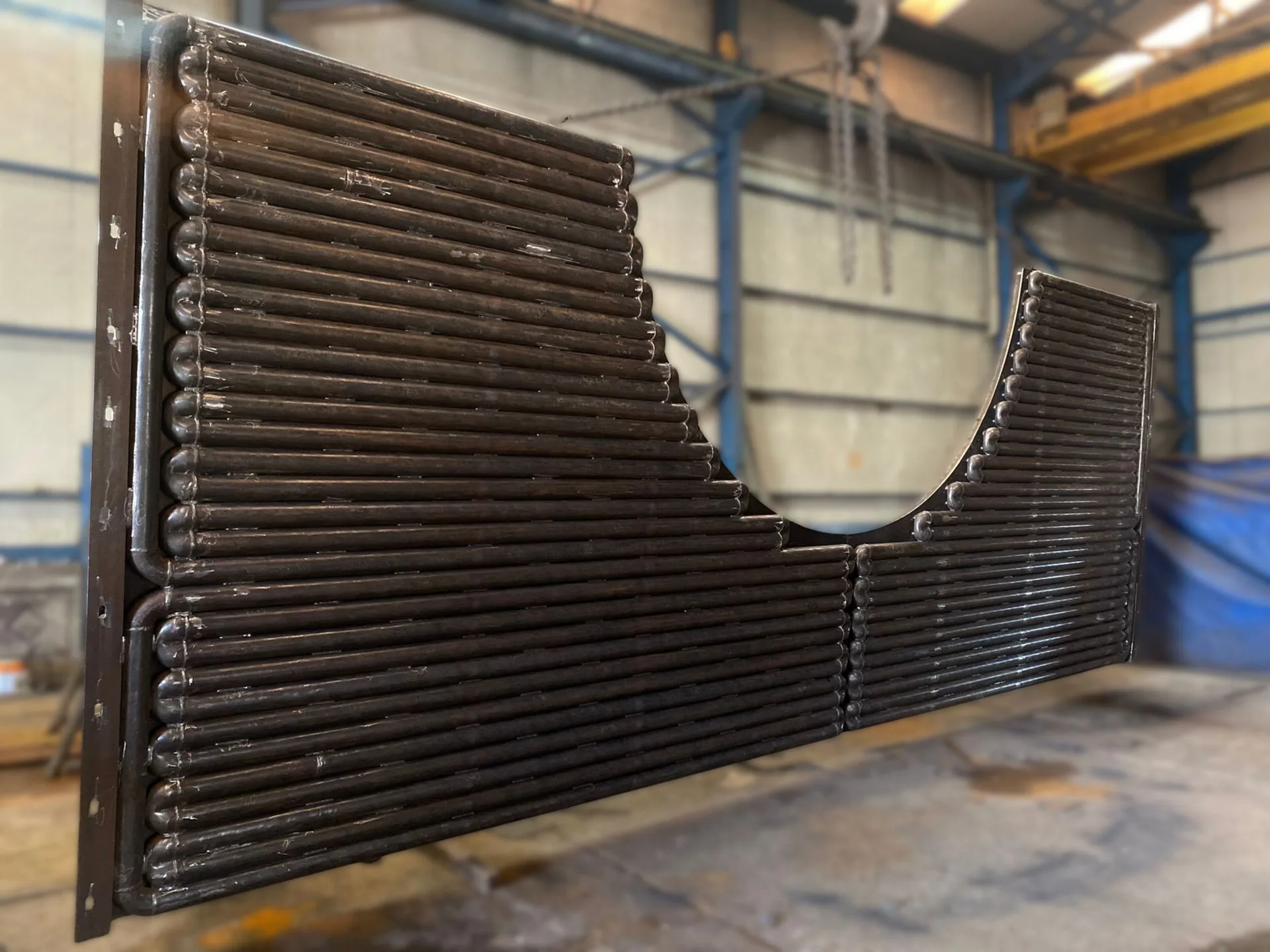
Gas leaving the electric arc furnace's fourth hole is at approximately 1300°C, and passes through a series of equipment before reaching the bag filter: water-cooled elbow, water-cooled duct, combustion chamber, quench cooling, compensator, gas cooler, bag filter and fan.
This chain's temperature profile is not arbitrary. Polychlorinated dibenzo-dioxins and furans form by de novo synthesis in the 250–450°C range, and the time the gas spends in that range determines how much forms. The system is therefore designed to cool quickly, not slowly. Equipment in this chain such as the compensator and bag filter are listed on the site under the Filtration Systems category.
Gas leaves the furnace at about 1300°C and must reach the bag filter at a temperature the bag material can withstand. Each piece of equipment in the chain has a job: the elbow takes the gas from the furnace, the water-cooled duct cools it while conveying it, the combustion chamber burns off unburned components, the quench takes the gas quickly through the dioxin formation range, and the compensator absorbs thermal expansion.
Dioxins and furans form in the 250–450°C range, with peak formation around 350°C. Published studies show that cooling the gas from 1300°C to about 250°C in 1–2 seconds passes through this range too quickly for significant formation. The same studies note that some formation continues in the downstream duct and inside the filter itself. This is also why waste heat recovery is limited to above 600°C.
Toulouevski and Zinurov state that systems using relatively low-cost bag materials must not exceed 120–140°C at the filter inlet, and that this limit can be raised to 200°C with more expensive materials. Dioxin considerations also call for a fast drop below 250°C — the two constraints work in the same direction.
No. According to Toulouevski and Zinurov, maximum gas evolution in the freeboard of a 120-tonne furnace is about 19,000 m³/h; but by the time these gases reach the bag filter, secondary hood capture and dilution air bring the flow to 1.4–1.5 million m³/h, a factor of 70–80.
Not in the water-cooled duct, but in the gap between the elbow and the duct. In Toulouevski and Zinurov's worked example, air entering through this gap raises the normal-condition flow to roughly four times its value and drops the gas temperature from 1650°C to 570°C. The water-cooled duct continues cooling from that point on.
Water-cooled elbow, water-cooled duct, combustion chamber, compensator and bag filter. DNL Mühendislik manufactures these individually and builds them into a complete filtration plant from end to end; scope is set per project.