Products
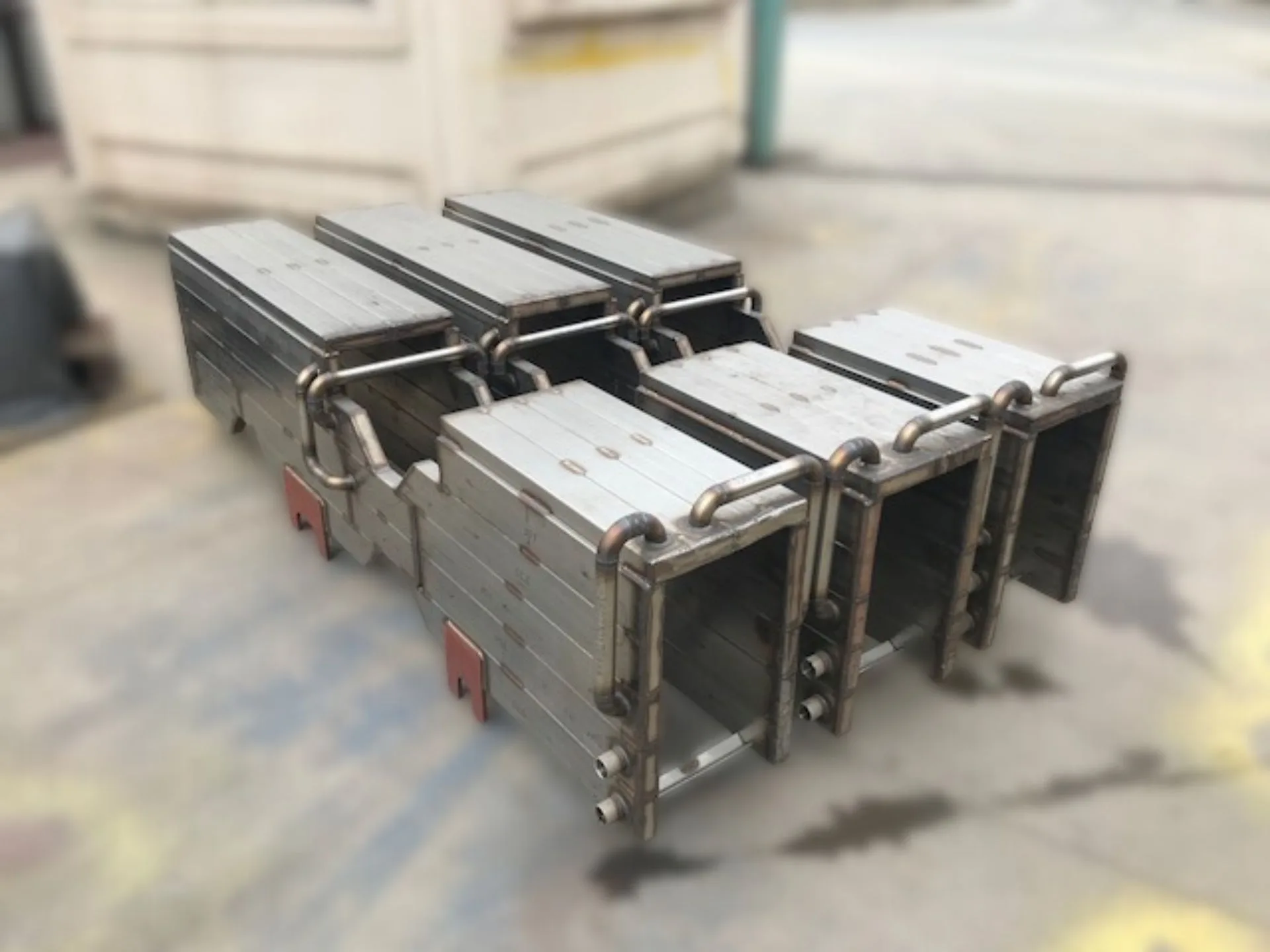
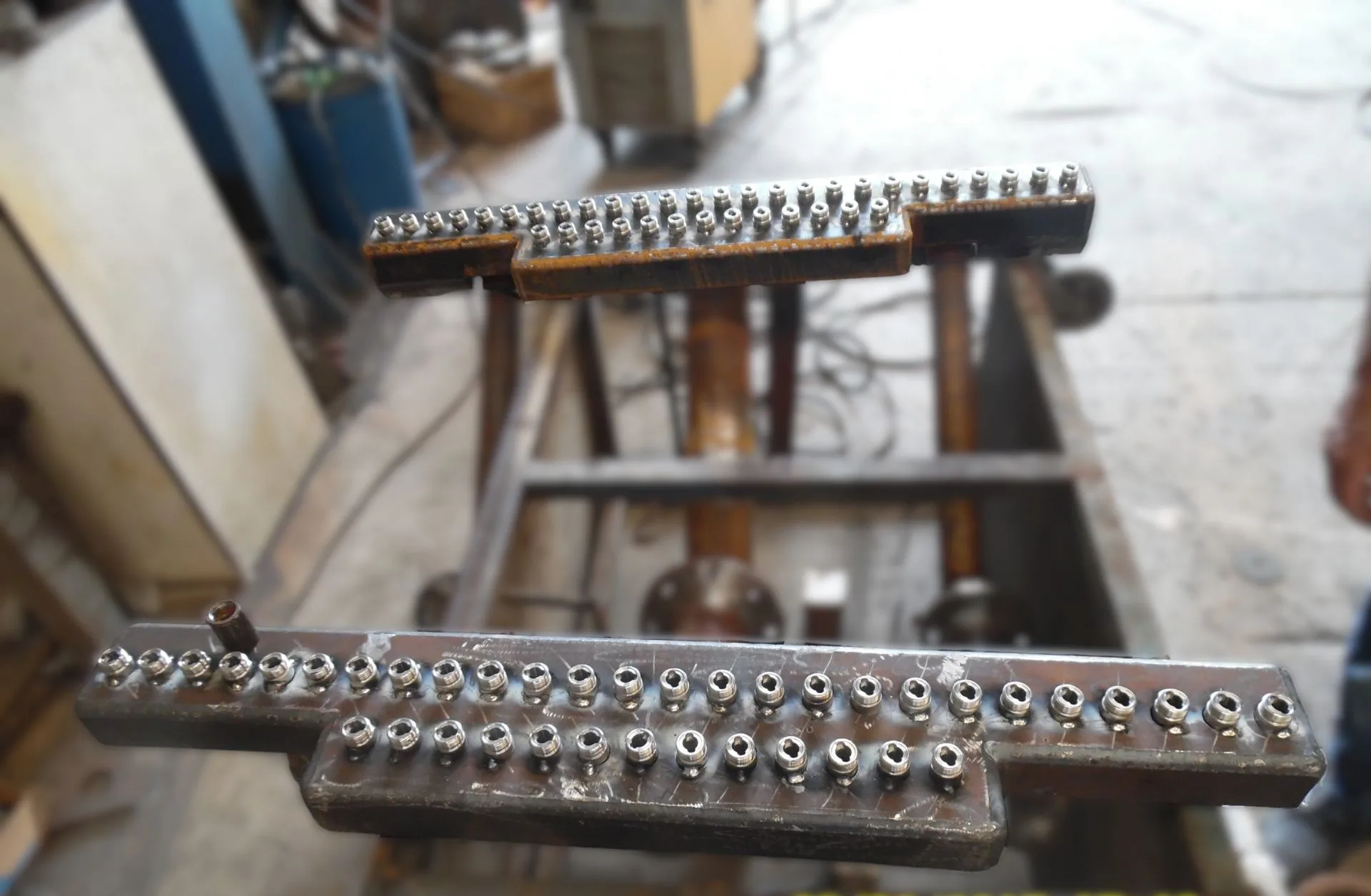
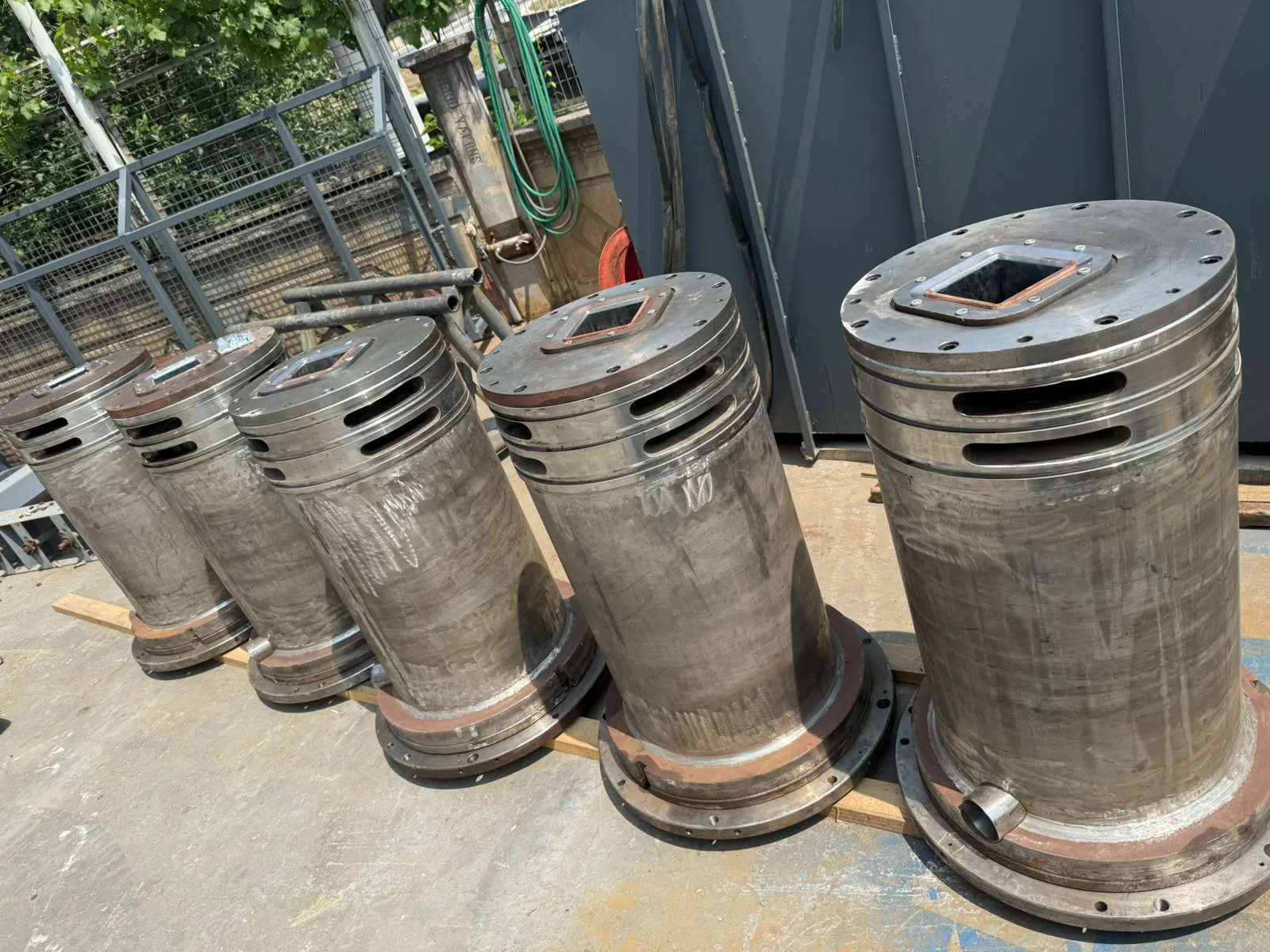
Pinch panels, billet caster components, copper moulds and spray nozzles — for high-efficiency continuous casting processes.
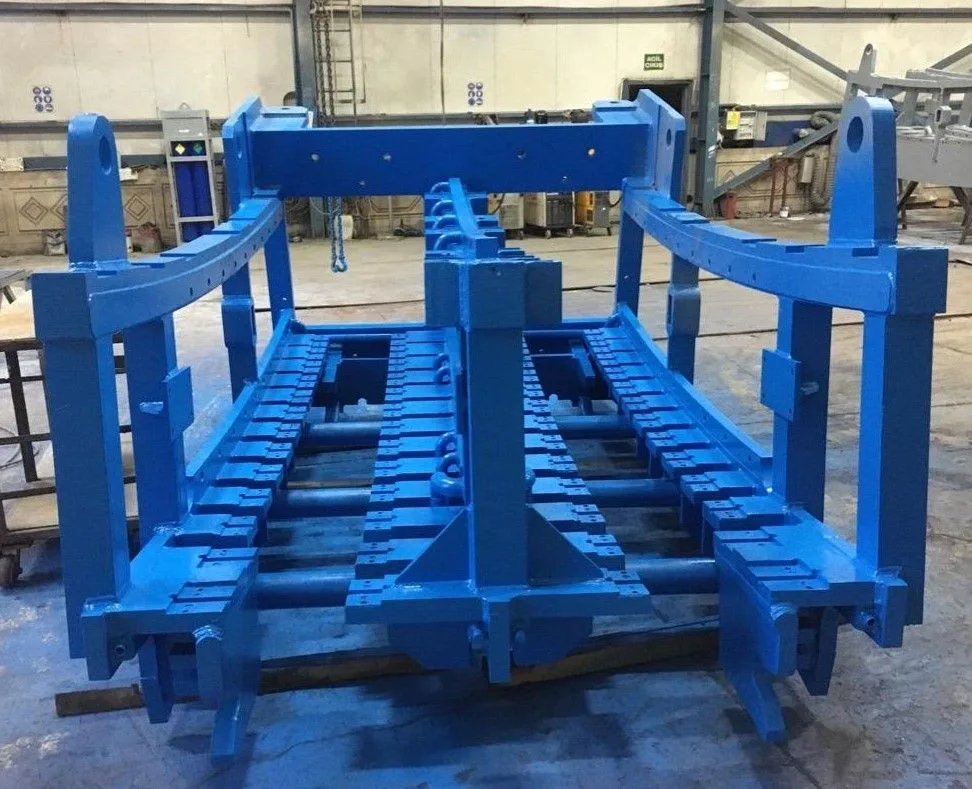
DNL Engineering manufactures pinch panels, billet caster components, copper moulds and spray nozzle systems for continuous casting plants.
Two. Primary cooling happens in the water-cooled copper mould; the liquid steel solidifies against the mould surface to form a shell. Secondary cooling takes place in the spray chamber below the mould; the still-solidifying billet is sprayed with water or an air-water mixture in independently controlled zones.
Far higher than an arc furnace panel. A numerical study on a high-speed billet casting mould gives an average heat flux of about 2.4 MW/m² between the billet shell and the mould at a casting speed of 4–4.5 m/min. For comparison, an arc furnace wall panel's peak value is on the order of 600–700 kW/m² (Toulouevski & Zinurov, Innovation in Electric Arc Furnaces, 2nd ed., Section 12.3.1). This is why mould cooling water is circulated at high velocity; published models give a mould water-channel velocity in the 4.5–7.8 m/s range.
As the solidifying shell cools it shrinks and starts pulling away from the mould wall. The taper compensates for this shrinkage and maintains contact. Because casting speed in billet casting can reach up to 6 m/min and shrinkage is significant, the taper is especially important.
The amount of surface reheating. Brimacombe's established design criterion allows the billet surface to reheat by no more than 50°C between zones. This is why spray zones aren't managed on a single setting — each has its own control valve, and water flow is varied with casting speed.
Copper moulds, water-cooled pinch panels, spray cooling systems and billet caster components. DNL Mühendislik manufactures these parts to the customer's billet cross-section and casting speed.