Filtration Systems
Multi-blade tight-closing louvers that fully isolate flue gas and air ducts — unlike a damper, they don't regulate flow, they cut it off.
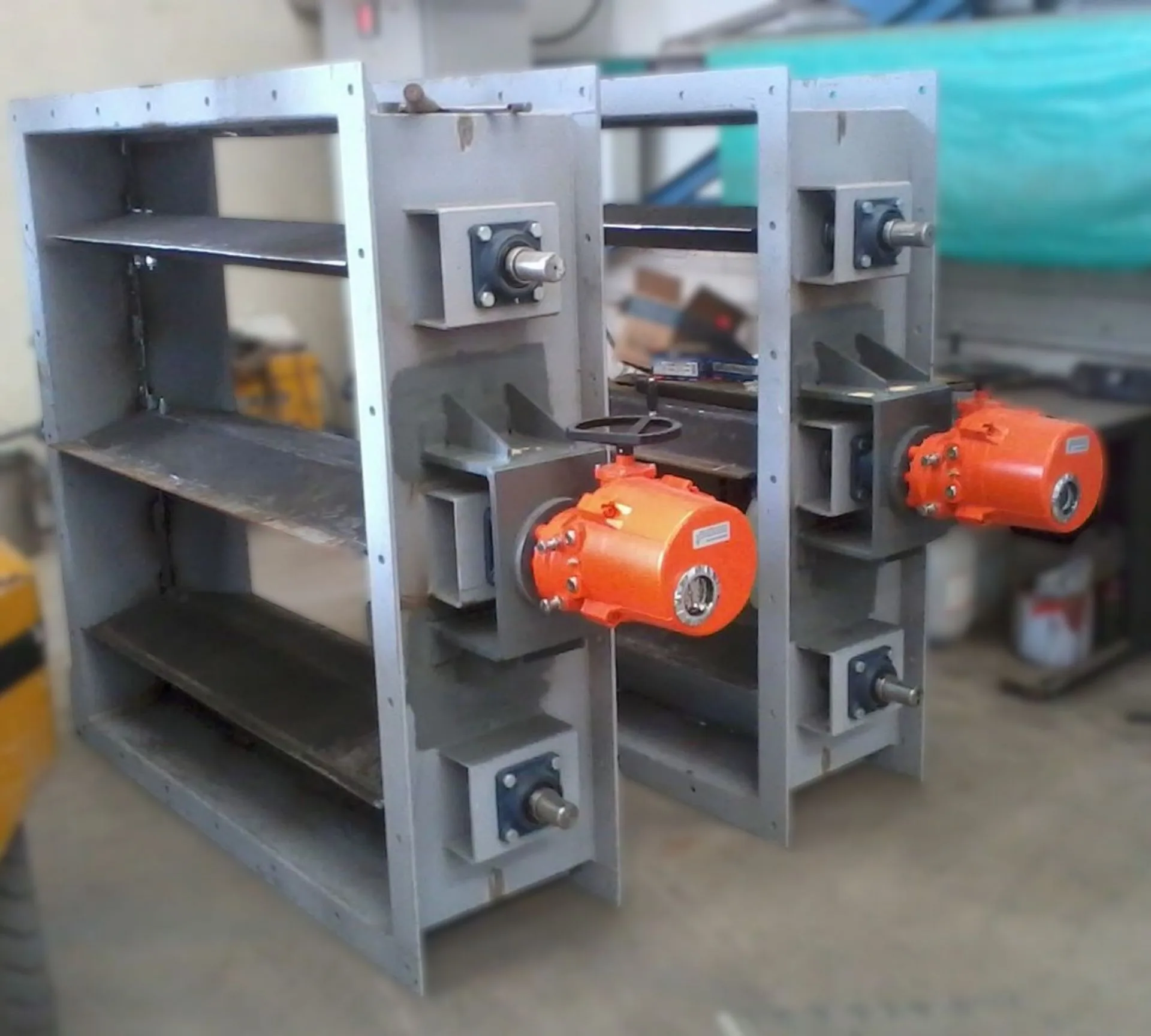
| Tight-sealing closure mechanism design |
| Material options suited to varied process conditions |
A tight-closing louver is a multi-blade isolation element installed inside a flue gas duct. The blades rotate together; in the closed position, seals along the blade edges and the frame cut off passage. The difference from adamper is purpose. A damper regulates flow, operates at intermediate positions, and allows a defined leakage when closed. A tight-closing louver cuts off flow; it operates open or closed and is not used for throttling at intermediate positions. The two elements are found together in most plants: the damper regulates draft, the louver isolates that section during maintenance.
Yes, and there is a standard for it. AMCA (Air Movement and Control Association) classifies dampers by the amount of leakage in the closed position. The two tightest classes: Class 1A, a maximum of 3 cfm/ft² at 1 inch water gauge differential pressure; Class 1, a maximum of 4 cfm/ft² at the same pressure. Leakage increases with the square root of the differential pressure — so when pressure increases fourfold, leakage doubles. A sealing value is therefore not meaningful without stating the pressure at which it was measured. Source: class definitions as published in AMCA-certified product catalogs; test method ANSI/AMCA 500-D, certification program AMCA 511.
There are three reasons, all maintenance-related. Safety: when a section is taken offline for maintenance, hot gas or dust must not leak into it — gas leaking into a duct where people are working is a direct life-safety issue. False air: air entering the system through a branch that should be closed wastes fan capacity and reduces the flow drawn from other branches. Condensation: hot, moist gas leaking into an idled section condenses on the cooler surface; acid condensation causes duct corrosion and blinds baghouse filters.
Sealing is achieved at two points: the seals along the blade edges and the seals where the blades meet the frame. These are wear parts. They make contact on every closing cycle and fatigue under temperature and dust. Gasket replacement should appear as a separate line item in the maintenance plan — the housing lasts twenty years, but the gasket is renewed on a much shorter interval. Sealing performance declines over time; the leakage value measured at commissioning is not the same as the value five years later.
At every section of a dedusting line that needs to be isolated: at the inlet and outlet of baghouse filter compartments (so the other compartments keep running while one is under maintenance), at fan inlets and outlets, between the stack and the diversion line, and at standby branch isolation points. DNL manufactures tight-closing louvers on a project basis, sized to duct dimensions and operating temperature; actuation can be manual or motorized.