Electric Arc Furnace (EAF) Components
EAF roof — high thermal load capacity with water-cooled panel system.
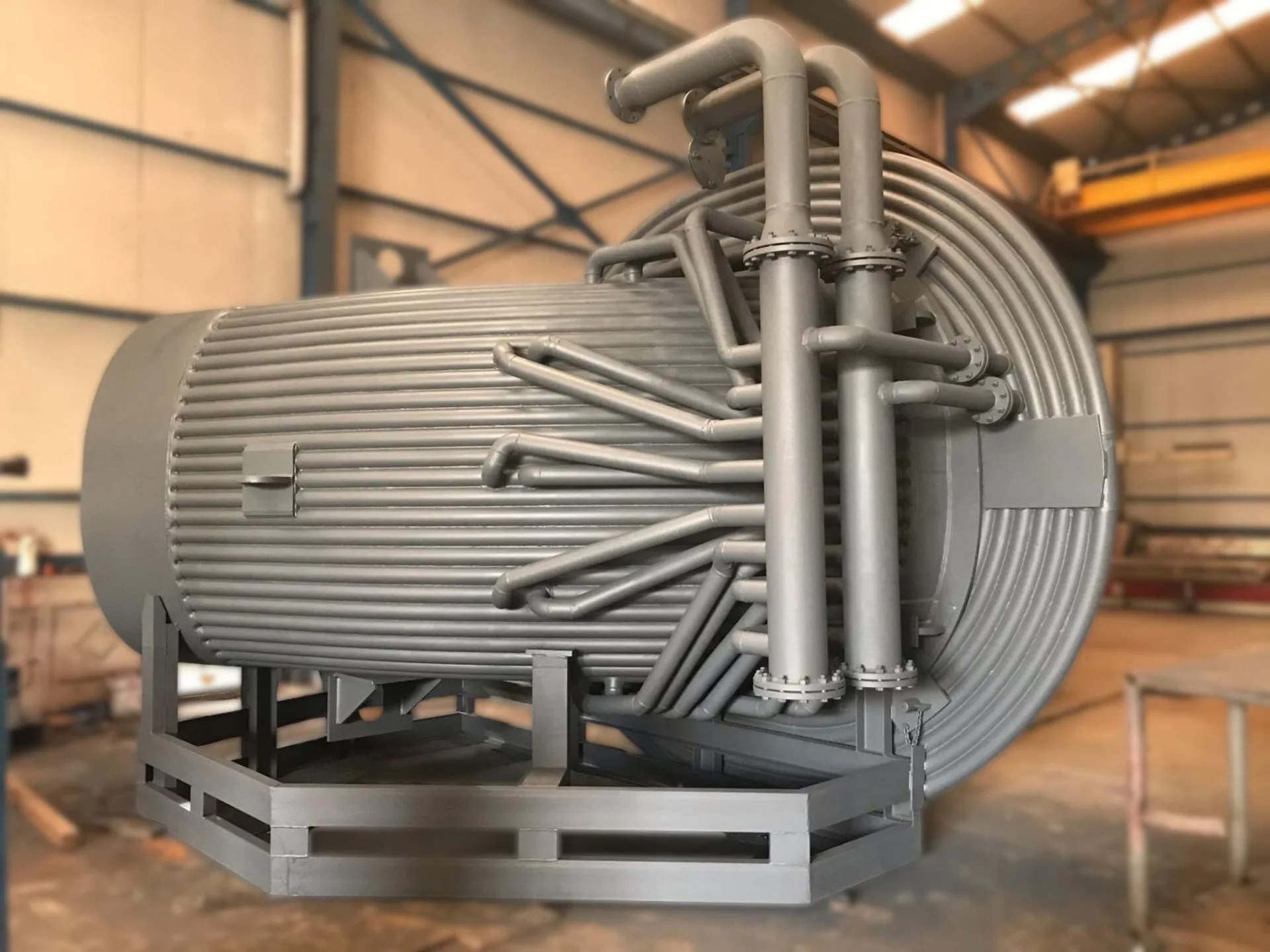
| Structural design: radial, delta or split options |
| Water-cooled panels: steel or copper options |
| Electrode holes and off-gas port to client specifications |
| Welding standard: EN ISO 3834-2 (TÜV NORD supervision) |
| Warranty period: 12 months |
The same order of magnitude as the wall panels. Toulouevski and Zinurov's Table 12.2 gives a peak flux value of 600–700 kW/m² for wall and roof panels, varying with the degree of arc coverage. The measured heat average on a 130-tonne furnace is 199 kW/m². Design follows the peak, not the average.
The intensity of bath splashing. Toulouevski and Zinurov state that the durability of roof refractories is directly related to bath splash intensity. Improving slag foaming increases this section's durability by 2–3 times; refractory consumption and repair cost drop accordingly. Stirring the bath with submerged tuyeres both eases foaming and extends the center section's life.
It acts as an insulating layer. According to Toulouevski and Zinurov, crust thickness ranges from 3–5 mm to several centimeters, and due to its porous structure its thermal conductivity is much lower than the panel metal's. But as heat flux rises, the crust exceeds its own melting point and thins; at very high flux it can disappear completely within minutes, and heat loss in that area rises several-fold.
DNL Mühendislik uses boiler-tube grades in its water-cooled elements — P265GH-TC1, P235GH-TC1, A106 Gr.B and equivalents. These grades are selected against the fire-side surface temperature limit of roughly 400°C for steel.
From the measured water flow, inlet and outlet temperature, and roof area. DNL Mühendislik'spanel cooling diagnostic tool calculates heat flux, water-side wall temperature and the boiling point from this data.