Products
Bulk-material storage silos, such as lime silos, coal silos and pellet silos.
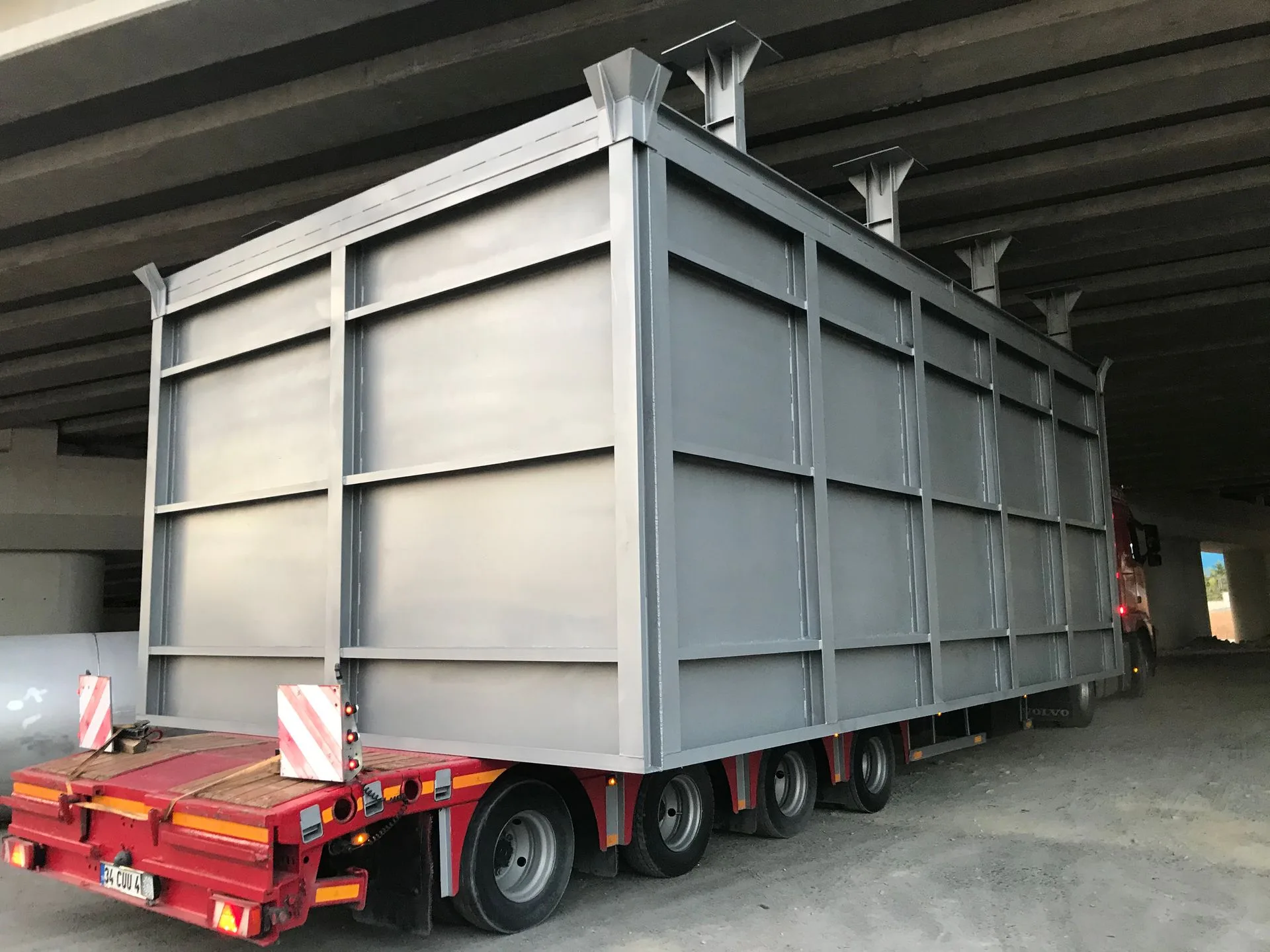
DNL Mühendislik manufactures silo solutions for storing dry bulk materials such as lime, coal and pellets.
Whether the discharge pattern is mass flow or funnel flow. The method Andrew Jenike established in the 1950s and published in Utah University Bulletin No. 123 (1964) still holds today: the material's cohesive strength, bulk density and wall friction are measured, and the required hopper angle and outlet size are calculated from them.
In mass flow, all the material in the silo moves when the outlet opens; first in, first out, with no dead zones and no segregation. In funnel flow, only a narrow channel at the center flows, while material against the walls stays stagnant. Funnel flow can lead to arching, ratholing, flushing and segregation, while mass flow carries only the risk of arching. The choice also drives the structural design: the loads mass flow imposes on the silo wall are greater than funnel flow's, so if mass flow develops later in a silo calculated for funnel flow, structural integrity is put at risk.
Arching is when the material forms a stable arch over the outlet opening and stops flow completely. Ratholing is when stagnant zones form during discharge and flow occurs only through a narrow channel. Both are caused by the strength the material gains under compaction, and this strength increases with time at rest — the longer material sits, the harder it becomes for it to flow on its own.
By a wall friction test. Contrary to common belief, there is no fixed angle for mass flow; the required angle depends on both the smoothness of the wall surface and the material's flow properties, and is calculated from Jenike's charts. Wedge-shaped hoppers achieve mass flow at flatter angles than conical ones.
Lime silos, coal silos and pellet silos. DNL Mühendislik manufactures the silo to match the material being stored and the plant layout.